Competitive Analysis
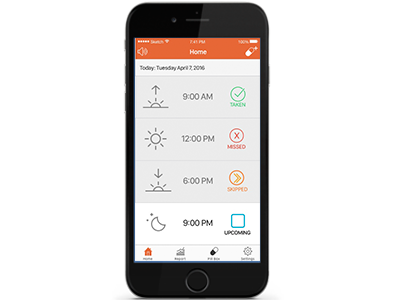
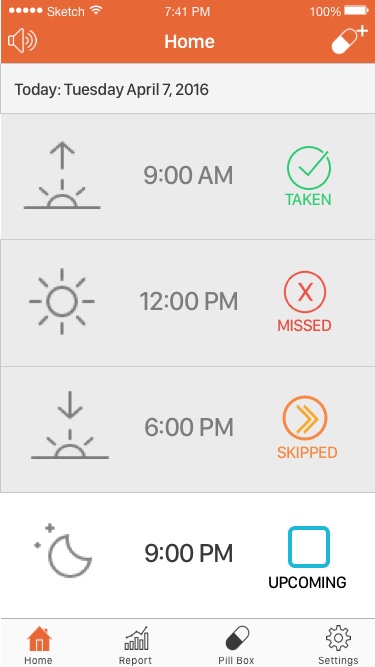
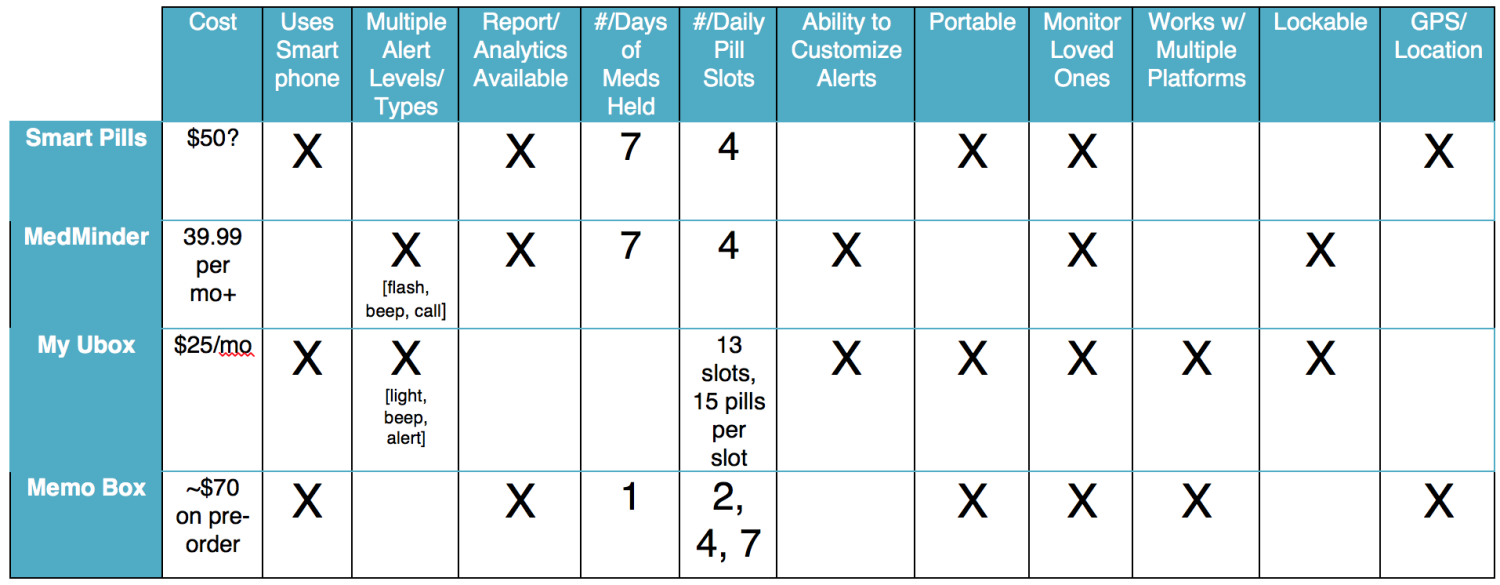
We found that our client's solution was lacking in flexibility for alert customization compared to their competitors.
Paper Prototypes
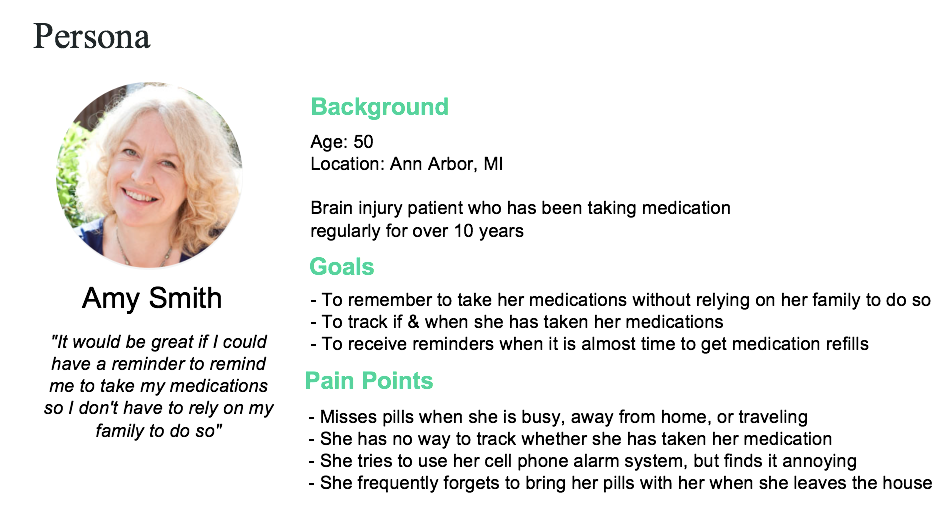
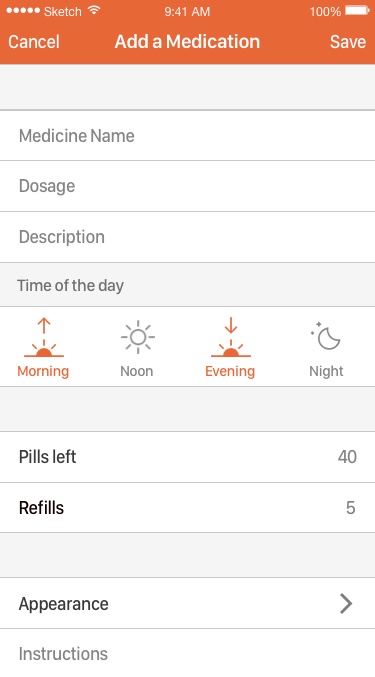
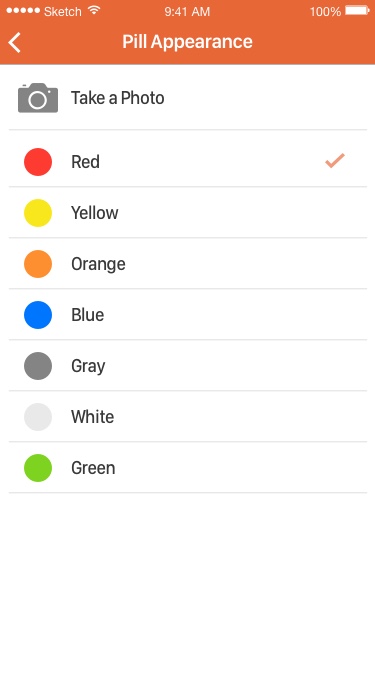
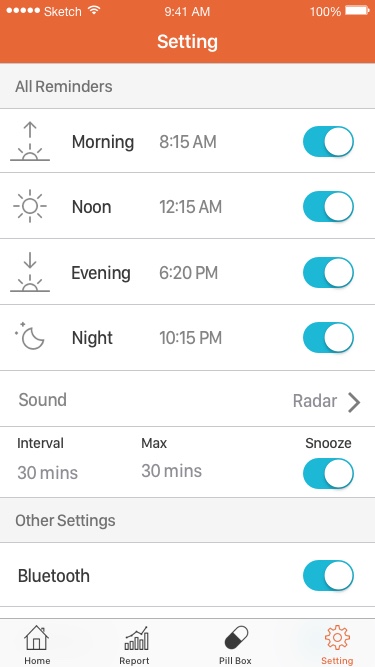
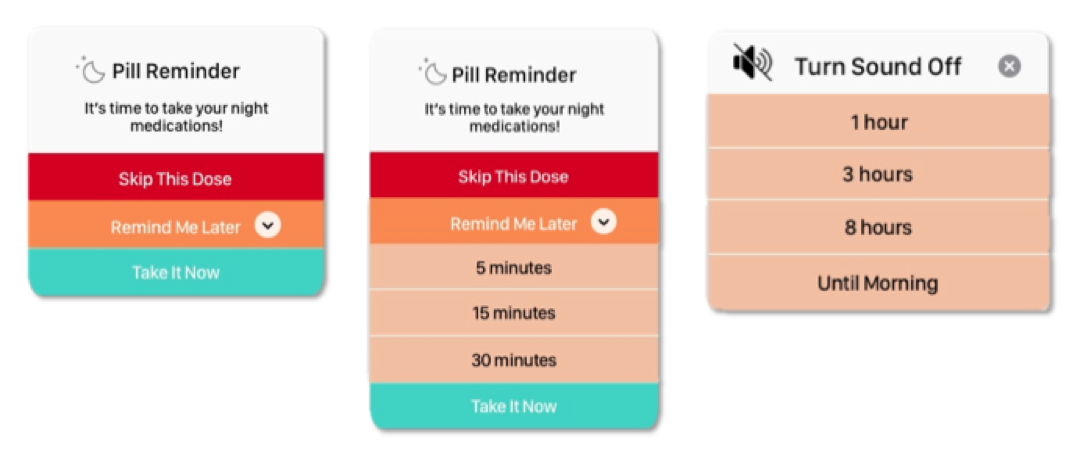
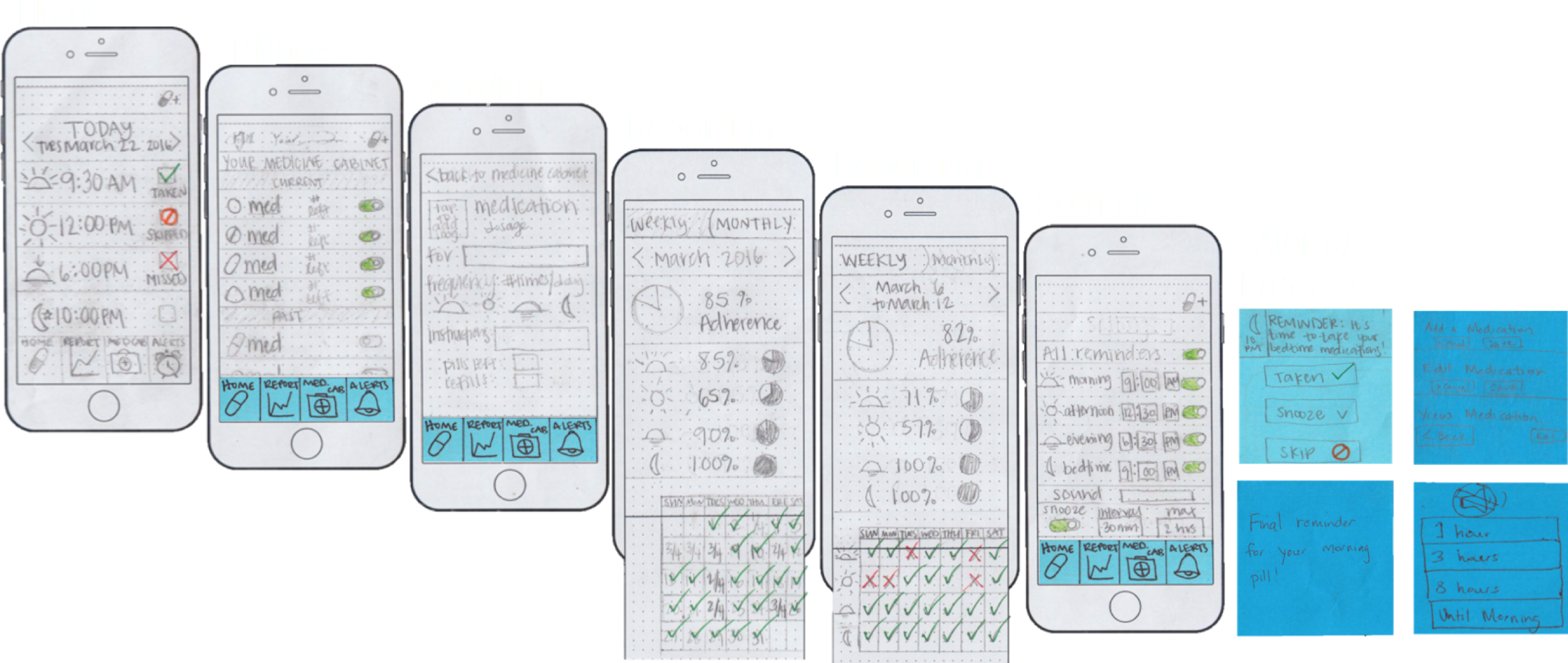
Our user research helped infuence our design decisions. We created a flexible snooze option so that users can have more control of when their next alert will be triggered. We also added options to turn the sound off their alarm for certain time periods.
User Testing and Design Iteration
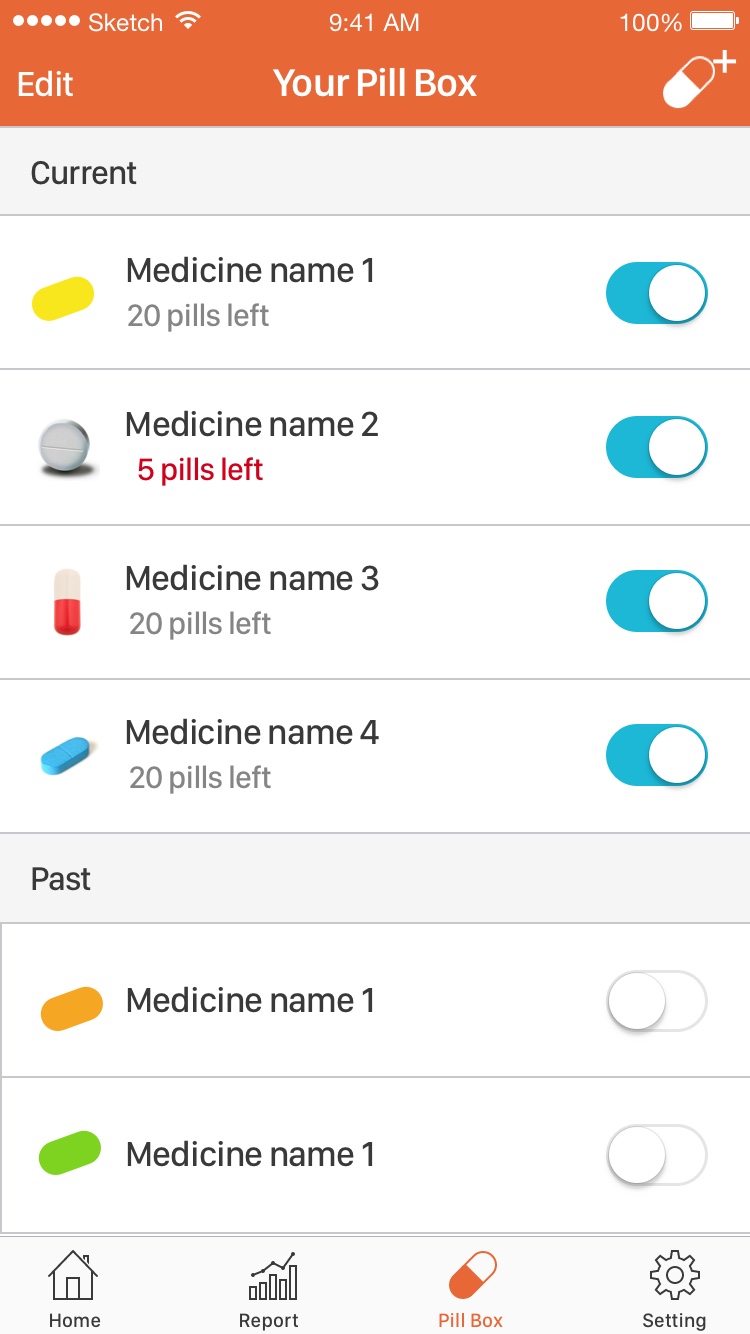
We conducted 5 user tests with our paper prototypes which helped with iterating on the design of our paper prototypes. Users found the "Home" paired with a pill icon was not intuitive. Users thought this would show them the contents of the pillbox. They also found the "Alerts" paired with bell or clock icon to be confusing and thought pressing that would turn off the sound.
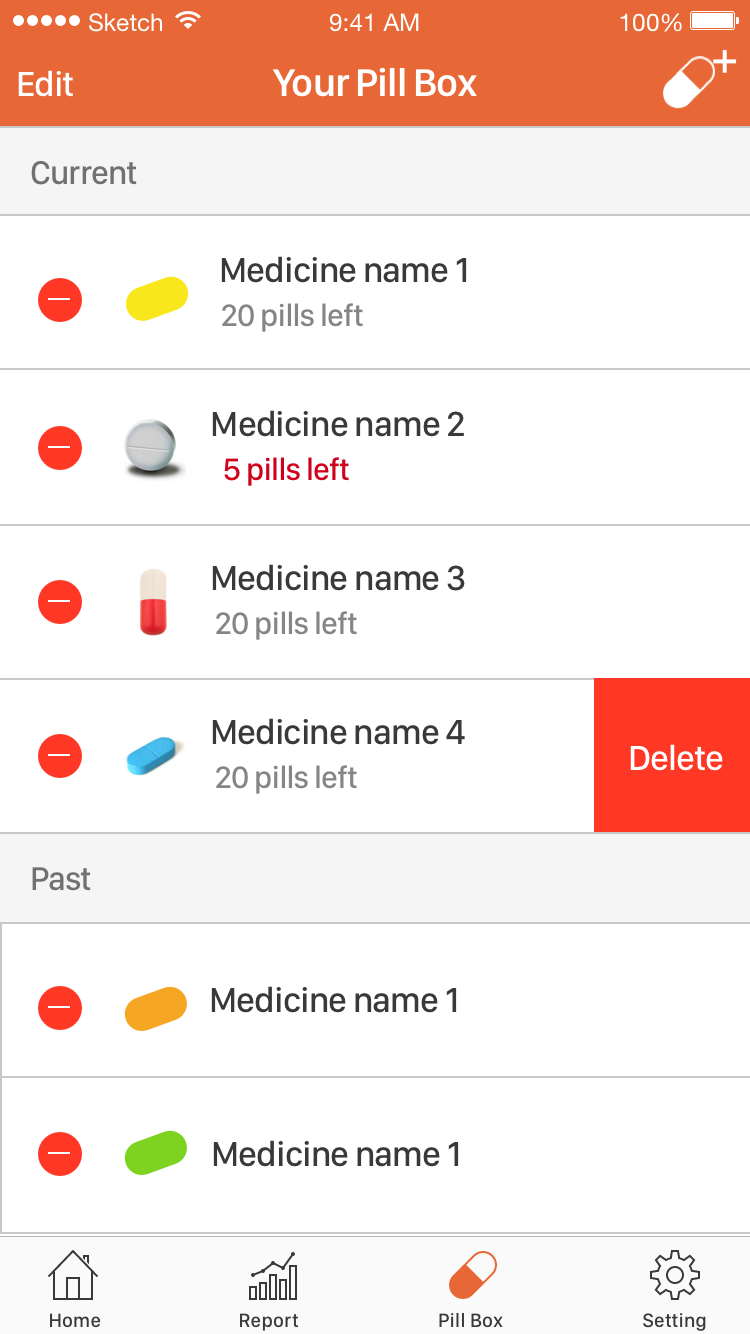
Our design iteration included these changes:
- Change navigation icon/labels
- Allow users to delete the medicine from their pillbox
- Rename the reminder pop-up button labels
- Change the snooze max time interval
Reflection
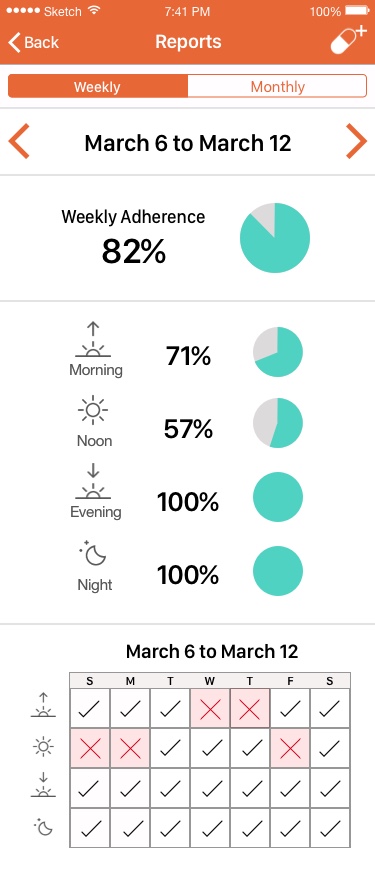
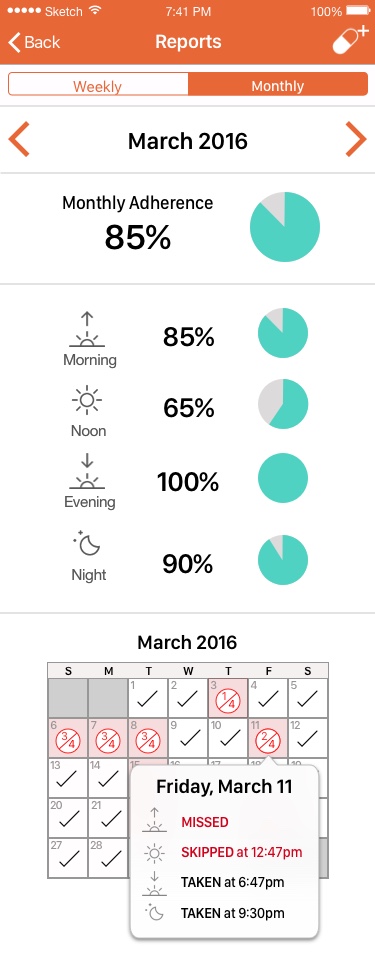
Towards the end of our design project I had the fortunate opportunity to meet with a professor who had much experience with medicine adherence and he gave us great feedback. One of which was related to the reporting charts. Using the pie chart is fine to report back on the details, but does not provide any motivation or feedback to the user to show progress such as improvement or degradation. He suggested that line charts may provide more motivation. Also, we could have incorporated some sort of gamification factor to help the user be more engaged and active in their medicine taking behaviors.
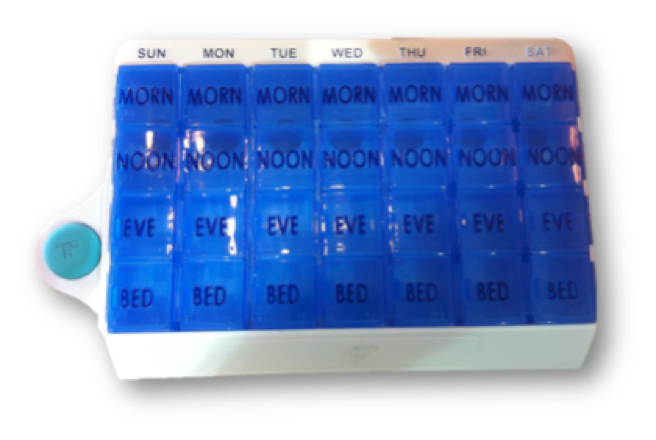
Finally, it would have been nice to have the physical pill box and a functional prototype working together to observe how it would be used in the true context of a user's life. Considering that many of the seniors we interviewed don't use smart phones, we think more user research should be conducted to find a solution that fits more users lifestyles.